


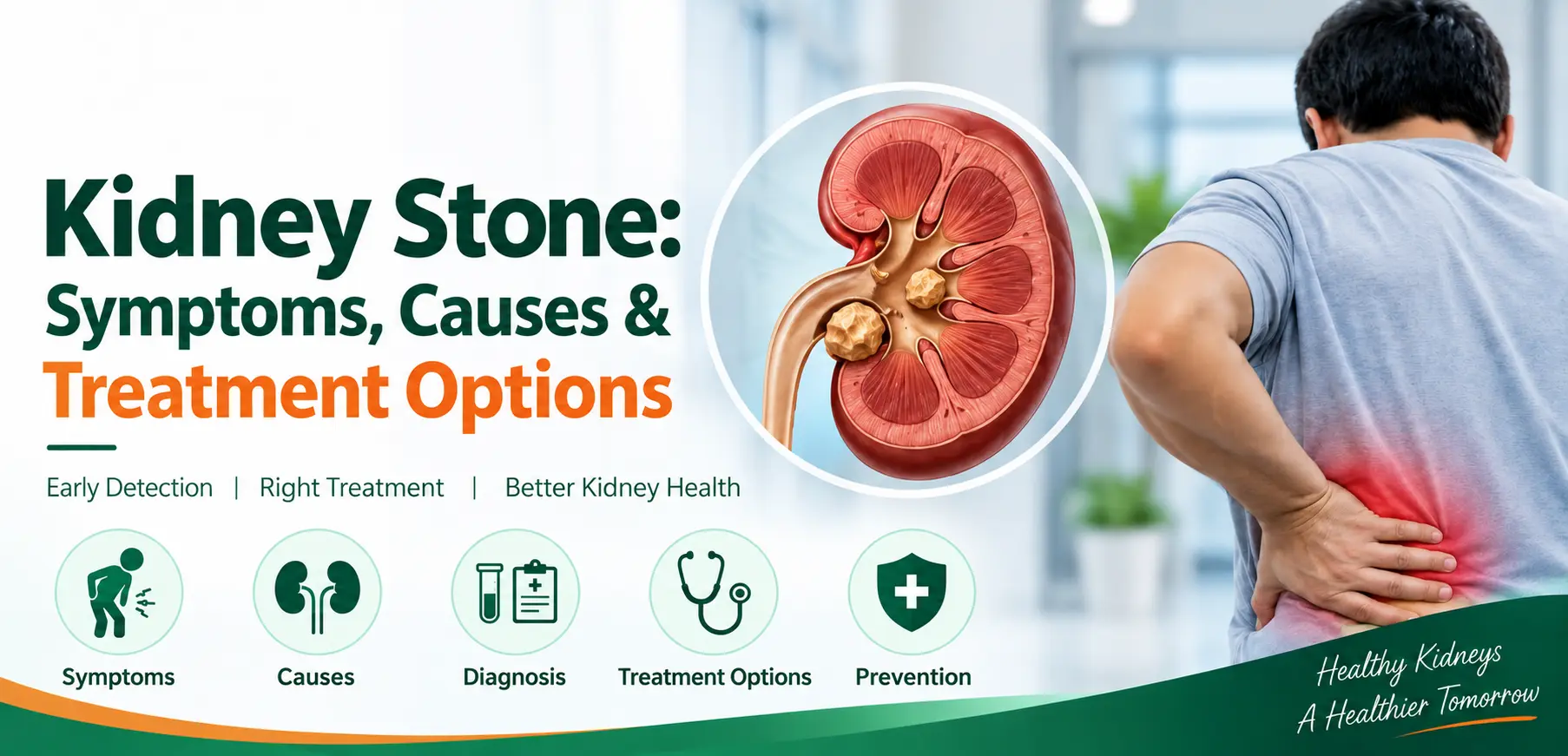
Kidney Stone: Symptoms, Causes & Treatment Options
Understanding kidney stone symptoms and treatment is important for people experiencing sudden back pain, painful urination, or recurring urinary problems. Kidney stones are hard deposits of minerals and salts that form inside the kidneys.
These stones vary in size and may remain inside a kidney or travel into the urinary tract. Some small stones pass naturally, while larger or complicated stones may require medical or surgical treatment.
The right approach depends on the stone's size, location, symptoms, and whether it is obstructing urine flow. This guide explains common warning signs, causes, investigations, treatment options, and prevention.
What Is a Kidney Stone?
A kidney stone, medically known as a renal calculus, is a solid deposit formed from minerals and other substances present in urine.
Kidney stones may develop when urine becomes highly concentrated, allowing certain minerals to crystallize and form solid deposits.
A stone can remain in the kidney without causing obvious symptoms. However, when a stone moves into the ureter, it may cause severe pain and interfere with normal urine flow.
Patients can learn more about relevant specialist care on Sudha Surgical Hospital's Urology Department page.
What Are the Common Symptoms of Kidney Stones?
Kidney stone symptoms vary depending on the stone's location, size, and whether it causes obstruction.
Some patients experience intense symptoms, while others have stones that are discovered incidentally during medical imaging.
1. Severe Side or Back Pain
Sudden pain below the ribs or in the side of the back is a common symptom. Pain may come in waves and spread toward the lower abdomen or groin.
2. Painful Urination
Some stones cause burning or discomfort during urination, particularly when located near the lower urinary tract.
3. Blood in Urine
Urine may appear pink, red, or brown. In some cases, blood is detectable only through laboratory testing.
4. Frequent Urination
A stone near the bladder may cause an increased urge to urinate or difficulty passing urine normally.
5. Nausea and Vomiting
Severe stone-related pain can be accompanied by nausea or vomiting, sometimes making oral fluid intake difficult.
6. Fever and Chills
Fever or chills may indicate an infection. If an obstructing stone is present, this may require emergency care.
Emergency Warning: Seek urgent medical care if kidney stone symptoms occur with fever, chills, inability to urinate, persistent vomiting, or uncontrolled pain. An infected, obstructed urinary system can be a serious emergency.
What Causes Kidney Stones?
Kidney stones can develop when urine contains a high concentration of certain substances that may crystallize. Several factors can contribute to this process.
1. Inadequate Hydration
Drinking insufficient fluids can lead to concentrated urine. This increases the likelihood that stone-forming minerals will crystallize.
2. High Sodium Intake
Excess dietary sodium may increase calcium excretion in urine and contribute to certain types of kidney stones.
3. Family History
People with close relatives who have experienced kidney stones may have a higher risk of developing them.
4. Certain Medical Conditions
Obesity, some metabolic disorders, recurrent urinary infections, and certain digestive conditions can increase stone risk.
5. Previous Kidney Stones
Individuals who have already experienced kidney stones are more likely to develop them again, particularly without appropriate preventive management.
What Are the Different Types of Kidney Stones?
Kidney stones are classified according to their chemical composition. Identifying the stone type may help guide prevention and treatment.
Calcium Stones
Calcium oxalate stones are among the most common types. They develop when calcium combines with oxalate or other substances in urine.
Uric Acid Stones
Uric acid stones may form when urine remains persistently acidic. Dietary and metabolic factors may contribute.
Struvite Stones
Struvite stones are associated with certain urinary infections. They can grow rapidly and sometimes become large.
Cystine Stones
Cystine stones are less common and are associated with cystinuria, an inherited metabolic condition.
How Are Kidney Stones Diagnosed?
Doctors assess suspected kidney stones using the patient's symptoms, medical history, physical examination, and appropriate investigations.
Urine Examination
Urine tests can help identify blood, infection, and certain substances associated with stone formation.
Blood Tests
Blood tests may be recommended to assess kidney function and relevant metabolic factors.
Ultrasound
Ultrasound can identify some urinary stones and signs of obstruction. It is often useful when avoiding radiation is particularly important.
CT Scan
A non-contrast CT scan can provide detailed information about the size, location, and number of urinary stones when clinically appropriate.
Learn about other available diagnostic and healthcare facilities on the hospital's Services page .
Kidney Stone Symptoms and Treatment Options
The most suitable kidney stone treatment depends on the stone's size, location, composition, symptoms, and impact on kidney function.
Not every patient needs surgery. Some stones may pass naturally, while others require an intervention to prevent complications.
Observation and Medicines
Small, uncomplicated stones may be managed with observation, pain relief, and follow-up. Selected patients may receive medication to assist stone passage.
Shock Wave Lithotripsy
Shock wave lithotripsy uses externally generated shock waves to break selected stones into smaller fragments.
Ureteroscopy
Ureteroscopy involves a thin instrument passed through the urinary passage to locate and treat a stone.
Percutaneous Nephrolithotomy
PCNL is a minimally invasive operation commonly considered for certain large or complex kidney stones.
Can Kidney Stones Pass Naturally?
Some smaller kidney stones can pass naturally through urine. However, the likelihood depends on the stone's dimensions and location.
The presence of infection, kidney impairment, uncontrolled pain, or significant obstruction may change the treatment plan.
When Is Emergency Treatment Needed?
A blocked urinary system combined with infection may require urgent drainage using a ureteral stent or nephrostomy tube. The definitive stone procedure may be performed after the infection is controlled.
Medical Advice: Never rely on excessive water intake or home remedies to force a painful, obstructing stone to pass. Follow the advice of a qualified urologist.
Is Kidney Stone Surgery Always Necessary?
No. Many kidney stones can be managed without surgery, especially when they are small, symptoms are controlled, and no complications are present.
Surgical or endoscopic treatment may be recommended if the stone is unlikely to pass, causes persistent obstruction, leads to recurrent severe pain, or threatens kidney function.
The decision is based on a specialist's assessment, imaging results, and the patient's overall condition.
How Can You Prevent Kidney Stones?
Kidney stone prevention focuses on adequate hydration and addressing factors that contribute to stone formation.
- Drink appropriate amounts of water throughout the day unless a clinician has recommended fluid restriction.
- Reduce excessive salt intake in daily meals.
- Maintain normal dietary calcium intake unless your doctor advises otherwise.
- Avoid unnecessary mineral or vitamin supplements without medical guidance.
- Follow individual dietary recommendations based on stone composition.
- Maintain a healthy body weight and balanced diet.
- Attend follow-up appointments, especially after repeated stone episodes.
People with recurrent stones may require additional metabolic evaluation. Kidney-related medical services are described on the Nephrology & Dialysis Unit page.
When Should You Consult a Urologist in Varanasi?
A urologist can assess recurring kidney stone pain, blood in the urine, persistent urinary discomfort, or stones identified during imaging.
Sudha Surgical Hospital provides information about its Urology Department in Varanasi on the official website.
Patients can also explore the hospital's Doctors page or view other Hospital Departments for related healthcare information.
For routine appointments or enquiries, use the Contact Us page . Urgent warning symptoms should be evaluated immediately rather than waiting for a regular appointment.
Concerned About Kidney Stone Symptoms?
For non-emergency urology consultations and information about available services, contact Sudha Surgical Hospital, Varanasi.
UROLOGY DEPARTMENT BOOK CONSULTATIONFrequently Asked Questions About Kidney Stones
1. What are the first signs of a kidney stone?
Common symptoms include pain in the side or back, blood in urine, painful urination, and nausea. Some stones cause no noticeable symptoms.
2. Can a kidney stone pass without surgery?
Yes. Some smaller stones pass naturally. The chance depends on the stone's size, location, and whether complications are present.
3. What is the best treatment for kidney stones?
Treatment varies by stone characteristics and patient condition. Options include observation, medication, lithotripsy, ureteroscopy, or PCNL.
4. Is kidney stone surgery always required?
No. Surgery is not always necessary. A procedure may be recommended for large stones, persistent obstruction, severe symptoms, or complications.
5. Can kidney stones damage the kidneys?
Yes. Persistent urinary obstruction or infection can affect kidney function. Timely evaluation helps reduce risk.
6. How can kidney stones be prevented?
Suitable hydration, reducing excess sodium, appropriate dietary changes, and follow-up can help reduce recurrence. Prevention depends on the stone type.
Related Tags
Explore Related Healthcare Services
- Urology Department
- Nephrology & Dialysis Unit
- All Hospital Departments
- Hospital Services
- More Health Articles


