


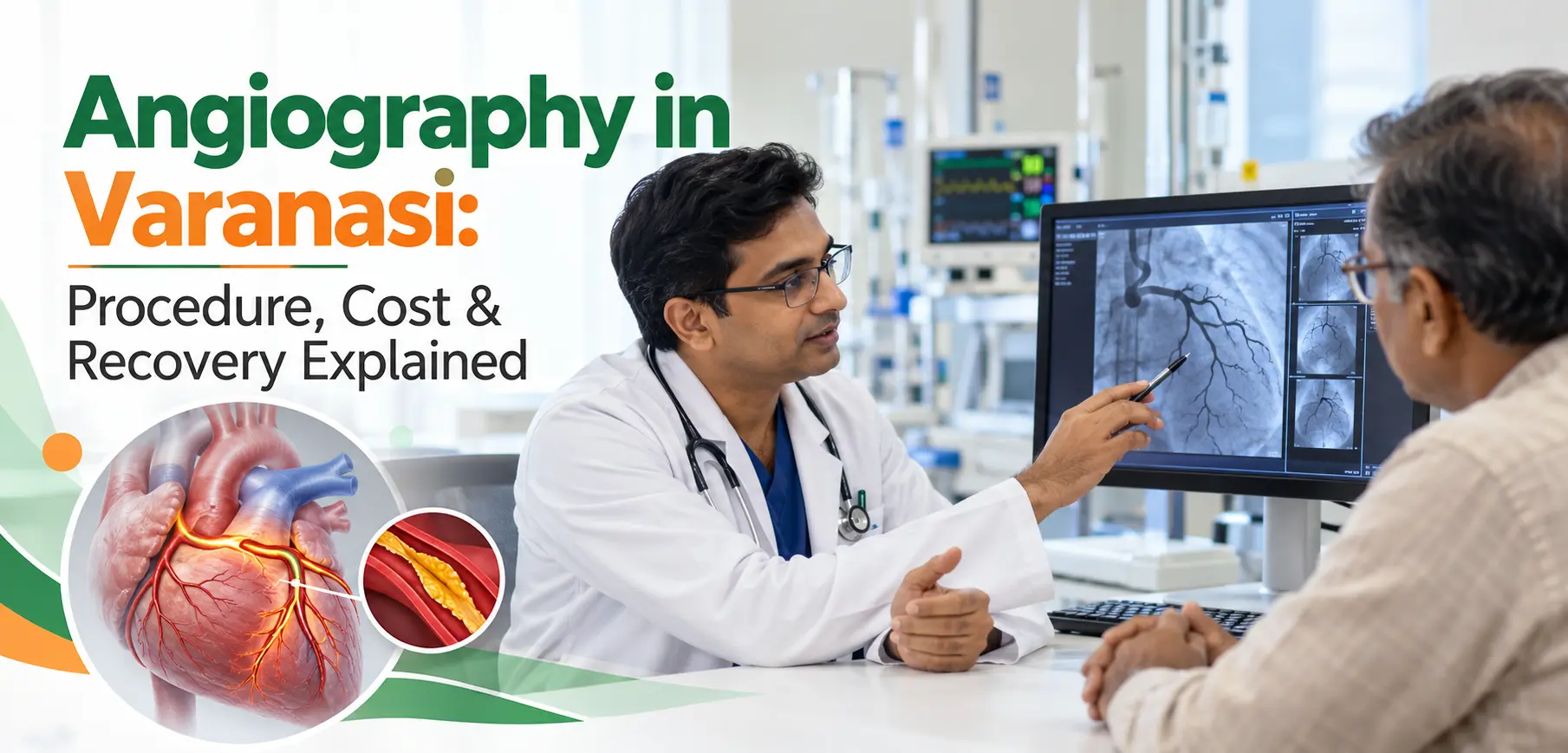
Angiography in Varanasi: Procedure, Cost & Recovery Explained
If your cardiologist has recommended coronary angiography, you may have questions about the procedure, safety, recovery, and angiography cost in Varanasi. Understanding these details can help you prepare for an informed discussion with your healthcare team.
Coronary angiography is an important diagnostic procedure used to examine the blood vessels that supply blood to the heart. It helps doctors identify narrowed or blocked arteries and determine whether additional treatment may be necessary.
In this guide, we explain what angiography involves, why doctors recommend it, what affects the cost, and how patients can prepare for and recover from the procedure.
What Is Coronary Angiography?
Coronary angiography is a medical imaging procedure that allows doctors to examine the coronary arteries. These arteries supply oxygen-rich blood to the heart muscle.
During the procedure, a thin flexible tube called a catheter is inserted through a blood vessel, usually in the wrist or groin. A contrast agent is injected, and X-ray images are taken to visualize blood flow through the coronary arteries.
The procedure is generally performed in a specialized cardiac catheterization laboratory, commonly known as a Cath Lab. You can learn more about cardiac care on the Cardiology Department page of Sudha Surgical Hospital.
Key point: Angiography is primarily a diagnostic procedure. It is different from angioplasty, which is a treatment used in selected cases to open narrowed coronary arteries.
When Do Doctors Recommend Angiography?
Coronary angiography may be recommended when a cardiologist needs detailed information about coronary artery disease or the cause of certain heart-related symptoms.
Common Reasons Include:
- Chest discomfort that may suggest reduced blood flow to the heart.
- Certain abnormal ECG, stress-test, or cardiac imaging results.
- Suspected acute coronary syndrome or particular types of heart attack.
- Persistent symptoms despite appropriate medical management.
- Assessment of coronary artery disease before deciding on further treatment.
Not everyone with chest pain needs coronary angiography. The decision depends on symptoms, risk factors, test results, and the treating doctor's clinical assessment.
How Is the Angiography Procedure Done?
Step 1: Medical Evaluation
Before angiography, doctors review the patient's medical history, symptoms, existing medications, allergies, kidney function, and relevant test results.
Step 2: Preparation
The medical team explains the procedure, discusses possible risks and benefits, and obtains informed consent. The patient is connected to monitoring equipment, and the access area is prepared.
Step 3: Catheter Insertion
Local anaesthesia is used to numb the insertion site. A catheter is then guided through an artery in the wrist or groin toward the heart under X-ray guidance.
Step 4: Contrast Imaging
Contrast dye is injected through the catheter, allowing doctors to identify narrowing or blockages in the coronary arteries using X-ray imaging.
Step 5: Completion and Monitoring
After the required images are obtained, the catheter is removed. The access site is managed to prevent bleeding, and the patient remains under observation.
Angiography Cost in Varanasi: What Affects the Price?
Angiography cost in Varanasi can vary according to the hospital, procedure requirements, clinical condition, investigations, and services included in the quoted package.
Hospital Facilities
Cath Lab equipment, facility charges, and procedure-related services may affect the total cost.
Patient Condition
Emergency cases or patients requiring additional medical monitoring may have different expenses.
Diagnostic Tests
Blood tests, imaging, medicines, and contrast material may be included or billed separately.
Hospital Stay
Observation duration, room charges, and insurance arrangements can influence the final bill.
Before proceeding, ask the hospital for a written quotation describing what is included and what may be charged separately.
Pricing note: This article does not quote an unverified hospital price. Contact Sudha Surgical Hospital directly to confirm current procedure availability and applicable charges.
How Should Patients Prepare for Angiography?
Proper preparation can help the medical team manage risks and improve patient safety. Follow the specific instructions provided by your treating cardiologist.
- Inform the doctor about all medicines and supplements you are taking.
- Discuss any previous allergy or reaction to contrast dye.
- Tell the medical team about diabetes, kidney disease, or other health conditions.
- Ask whether fasting is required before the procedure.
- Do not stop blood thinners or other prescribed medicines without medical instructions.
- Arrange suitable transport and assistance after discharge.
Is Coronary Angiography Painful?
Angiography is commonly performed under local anaesthesia at the catheter insertion site. Patients may feel a brief sting when the area is numbed or some pressure during catheter placement.
A temporary warm sensation may occur when the contrast agent is injected. Experiences vary, and patients should inform the medical team immediately if they feel significant pain or unusual discomfort.
Recovery After Coronary Angiography
Recovery depends on the patient's condition, the access site used, medications administered, and whether additional treatment was required.
Some patients may return home on the same day after uncomplicated diagnostic angiography. Others may need longer observation or hospital admission.
Care After the Procedure
- Follow instructions regarding movement and physical activity.
- Monitor the insertion site for bleeding or swelling.
- Take prescribed medicines as instructed.
- Attend recommended follow-up appointments.
- Ask when normal activities and work can be resumed.
Seek urgent medical evaluation for significant bleeding, severe chest discomfort, breathing difficulty, fainting, or other serious symptoms following the procedure.
Are There Risks Associated with Angiography?
Although coronary angiography is commonly performed, it carries some potential risks. These may include bruising, bleeding, blood vessel injury, allergic reactions to contrast, and kidney-related complications in susceptible patients.
Serious complications, including heart attack or stroke, are uncommon but possible. A qualified cardiologist assesses the expected benefit and individual risks before recommending the procedure.
What Is the Difference Between Angiography and Angioplasty?
Angiography is primarily a diagnostic test that helps doctors visualize the coronary arteries. Angioplasty is a treatment procedure used to widen certain narrowed or blocked arteries.
During angioplasty, a balloon may be inflated inside the narrowed artery, and a stent may be inserted. However, angiography does not always lead to angioplasty.
Depending on the findings, treatment may involve medicines, angioplasty, bypass surgery, or other management approaches.
Heart Care and Angiography Consultation in Varanasi
Patients considering coronary angiography should discuss the expected benefits, risks, alternatives, recovery, and financial implications with their cardiologist.
Sudha Surgical Hospital provides information about its Cardiology Department and other healthcare services through its official website.
You can explore the hospital's doctors or use the Contact Us page for non-emergency enquiries about available consultations.
Need Information About Angiography in Varanasi?
Contact Sudha Surgical Hospital for non-emergency cardiology consultations, procedure availability, and current hospital charges.
CARDIOLOGY DEPARTMENT CONTACT HOSPITALFrequently Asked Questions
1. What is the angiography cost in Varanasi?
The cost depends on the hospital, medical condition, investigations, medicines, and package inclusions. Request a current quotation directly from the hospital.
2. How long does coronary angiography take?
Diagnostic angiography often takes less than an hour, although preparation, observation, and additional treatment can extend the total hospital time.
3. Is angiography a major surgery?
It is an invasive, catheter-based diagnostic procedure rather than traditional open-heart surgery. Appropriate precautions and monitoring are still required.
4. Can a patient go home on the same day?
Some patients can be discharged on the same day after uncomplicated diagnostic angiography. Others may need longer observation.
5. Does angiography always require a stent?
No. Angiography provides diagnostic information. A stent is used only when clinically indicated.
6. Is angiography safe for patients with kidney disease?
Kidney disease can increase the risk of contrast-related complications. The medical team assesses kidney function and determines suitable precautions.


